Frequently asked questions about our 2026-27 Budget
Where does the Shire get its income?
Our operating income for 2026-27 is estimated to be $53.6 million.
Around two-thirds (63%) of the Shire’s operating revenue comes from rates – which are a property tax landowners pay annually to their local council to help pay for the services, facilities and infrastructure needed by the community.
We also get 29% of our income from fees and charges for a range of services including kerbside waste collection, recreation centre use and swimming lessons, animal registrations and planning services. Smaller sources of operational funding include grants (4%) and interest (4%).
On top of this, we leverage as much as we can via grants and developer contributions, which helps to fund our capital work programs.
What are the Shire’s main areas of expenditure?
Our annual operating expenditure is around $62.3 million, with an additional $34 million allocated for capital works to renew or upgrade our community’s assets.
Services are at the core of what we do, which is why employee costs are our largest expense (43%). We also maintain assets valued at more than $560 million, such as roads, footpaths, and community buildings, so around 24% of our operating costs are for materials and contractors. Additionally, these assets lose value over time due to wear and tear, which is why depreciation is also a major expense (25%).
How much funding does the Shire receive from grants and developer contributions?
In 2026-27 we anticipate receiving $16.933 million in non-operating grants, subsidies and contributions during 2026-27, including $7.5 million for the extension of the Wadandi track and $1.8 million for new emergency service vehicles.
Your expenses are more than the income – does this mean you won’t break even?
We’re constantly planning for the future, and our 2026-27 budget is part of a ten-year Long Term Financial Plan. When we know we have big projects coming up, we create ‘reserves’, which are like savings.
In years when we need to, we draw down on these reserves, which also helps us avoid sudden rate increases in later years.
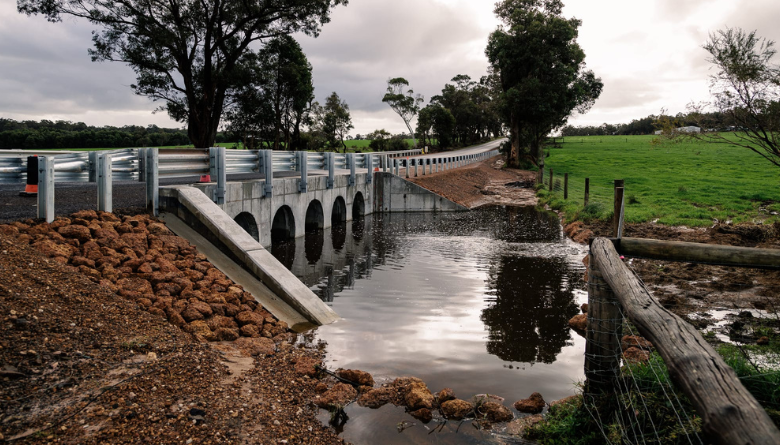
We currently have around $32 million in reserves set aside for specific purposes. This includes contributions from property developers to help pay for infrastructure in new developments, such as stormwater upgrades on Station Road and path and road upgrades in Augusta.
How does the Shire decide where to invest?
Maintaining and renewing community assets and infrastructure is one of the Shire's biggest responsibilities and accounts for a significant share of our annual budget.
Our budget reflects a rigorous planning process to prioritise what matters most. When deciding which projects to deliver now and which to schedule for the future, we consider many factors including the asset's condition, how often it is used, the impact on the community, as well as opportunities to secure external funding.
We also consider the essential and valued services we deliver every day, including waste, ranger services, public health, libraries, recreation and cultural facilities, and the level of demand for each service.
This work is guided by the Shire's Strategic Community Plan 2025–2035, which sets out our community's long-term priorities
The biggest expense is employee costs – why is this so much?
Services are at the core of what we do, which is why employee costs are our largest expense. We have a workforce of 222 full-time equivalents, which includes the rangers who patrol our beaches and public open space, the teams of staff who maintain our roads, parks and reserves, the staff who oversee planning, building and public health services, and the staff who run our recreation centres, libraries and performing arts centre.
We’ve budgeted for just 3 additional full-time staff to respond to increasing service demands arising from sustained population growth, development activity and visitor numbers.